Van Tracking Solutions: What Small and Mid-Size Fleets Should Look For
For some operations, the van is more important than the storefront. When customers think of service businesses in HVAC, plumbing, and electrical, they picture a van stocked with tools and supplies arriving at their location, not the small office they called for help. The same goes for courier and delivery operations, where vans appear in customers’ driveways instead of customers driving to the warehouse.
Owners and operations managers in these spaces recognize that how they organize and direct their van fleets determines how successful their businesses will be. They know technology solutions like fleet tracking can help optimize their operations. But they’re also familiar with a frustrating trend, which is that most marketing content surrounding tracking technology is simply repackaged from the long-haul trucking industry. That’s a problem because van fleets operate entirely differently from cross-country trucking operations.
A local service business deals with significantly more stops per day, much shorter routes, and far more interaction points. An HVAC company might run six vans and juggle a dozen service calls a day. What an owner or fleet manager really needs is a framework for daily van operations, not something repurposed from the truck-fleet sector. They need granular data showing whether jobs started on time, if drivers are safely navigating mixed residential and commercial routes, and whether vans are idling needlessly between stops.
In other words, van fleets need tracking built around how they actually work. But how do you find small and mid-size van tracking solutions in a marketplace focused on enterprise fleets? Below, we’ll cover what to look for, so you can find the van tracking solutions that truly support a localized, high-turnover service day.
How Van Tracking Solutions Actually Work
Let’s start by setting aside enterprise-grade, truck-focused tracking platforms. While many are excellent products, you know they’re too focused on large fleets of semi-trucks traversing the country. Their scope is too big and more focused on logistics than service. So what would an ideal van fleet tracking solution look like?
A van tracking solution is a much-simplified version of the larger platforms, built from two components. There is a hardware layer, which is the physical device installed in each van, and a software layer, which is the app and dashboard you use to view the data. Together these two components bring tracking down to a scale that fits small and mid-size service businesses. On the hardware side, there are a few options:
- OBD-II plug-in devices: The easiest hardware to manage, as a small device plugs directly into the vehicle's onboard diagnostic port. OBD-II devices draw power directly from the van and pull rich diagnostic data, including vehicle location, engine health, and ignition status in a single, comprehensive feed.
- Hardwired trackers: These devices typically require professional installation. One advantage is that they can be hidden under the hood, which matters in high-security environments.
- Battery-powered GPS units: Finally, these trackers report location only, as they don’t connect to the vehicle’s wiring or onboard computer. They are a lighter-weight option if deep maintenance visibility isn't an operational priority.
Finally, there’s the software layer. Regardless of the hardware, most modern van tracking solutions pair the physical device with a companion mobile app and a web-based dashboard, rather than just shipping a bare GPS tracker for service vans. The software is the most important component because you use it every day. It is the tool you rely on to track your fleet, optimize dispatching, and monitor vehicle health.
The Van Tracking Capabilities That Matter Most
When you start looking into van fleet management software, you’ll find a broad range of options. Here’s where it’s important to focus on what you really need. Apps with a ton of features you’ll never use are a wasted expense. Instead, look for solutions that offer the capabilities that matter most for a van fleet, such as:
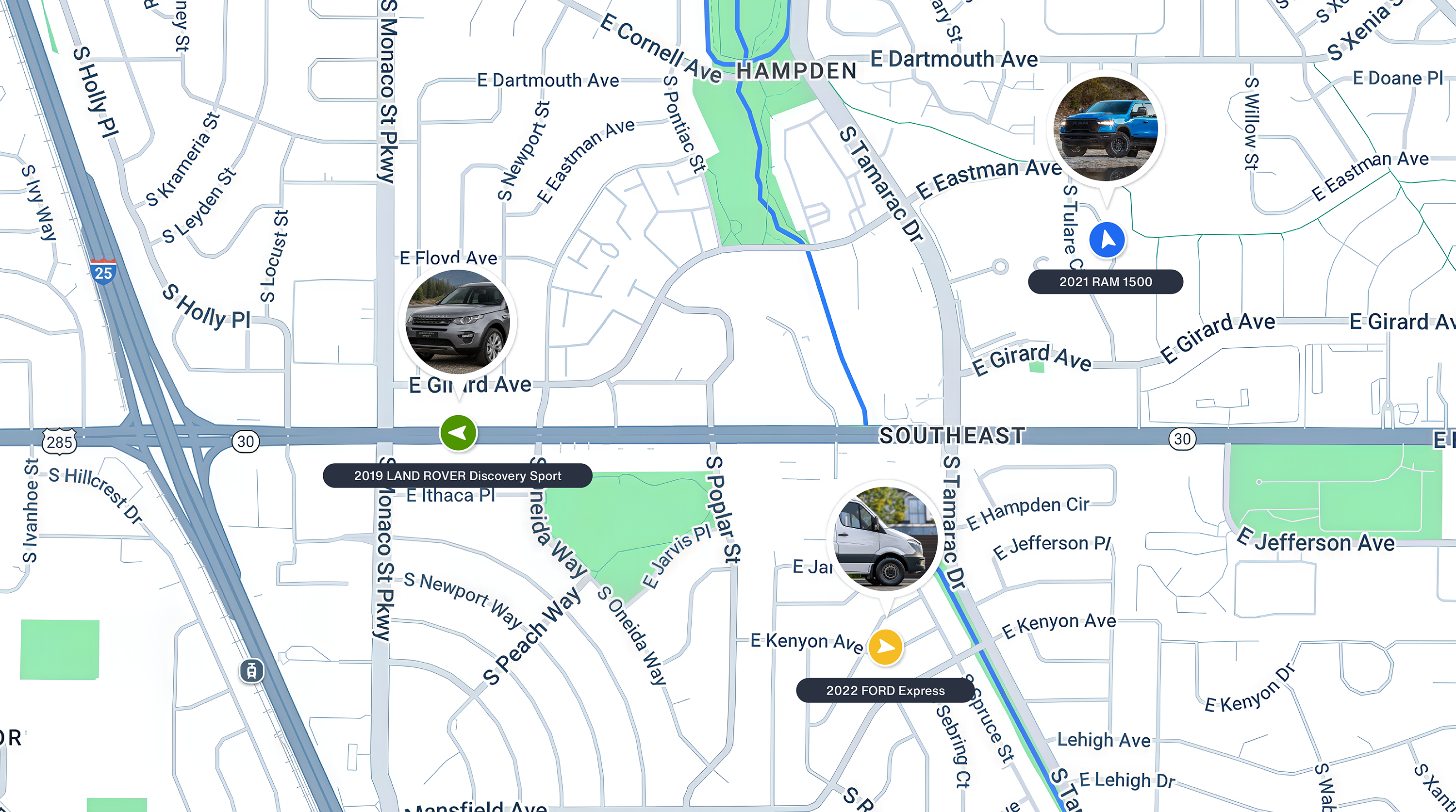
Real-time location tracking and dispatching: A dispatcher who can view the entire fleet on a live map can assign the closest available van to a new or reactive job, eliminating the need to guess who is nearby. The dispatcher can provide accurate, location-based ETAs, which helps improve the customer experience during service and delivery calls.
Be aware, however, that some basic apps claim to be “real time” but only refresh locations every few minutes. A system that updates in seconds is important when making same-day, reactive dispatch decisions.
Driver behavior and safety monitoring: Look for solutions that alert you when van drivers speed or brake too hard. Catching these driving behaviors before they escalate into an accident can save your business from an expensive liability claim.
The software should also monitor other driving behaviors, like excessive idle time. The financial drain of wasted fuel adds up much faster for vans making frequent short stops than for over-the-road trucks. Just make sure to present van fleet tracking to your employees as a coaching tool for drivers, not a punitive one.
Geofencing and accountability: Geofencing is a feature that lets you draw boundaries on a digital map. It can then record timestamps when your van enters or exits these areas. Geofencing helps verify time spent on-site or resolve billing disputes.
Geofencing can also flag unauthorized vehicle use. If, for example, a van leaves its expected radius after business hours or deviates significantly from its assigned route, you can receive a geofencing alert.
Vehicle health and diagnostics: Service vans rack up vastly more stop-start wear per day than long-haul trucks. An OBD-II device taps into the vehicle’s onboard computer so that it can trigger alerts for Check Engine lights and other diagnostic codes. You can catch developing mechanical issues early, preventing a breakdown that strands a van mid-route.
You can also pull accurate mileage data from the onboard computer, which simplifies expense reporting, employee reimbursement, and year-end tax documentation when compared to manual tracking.
What Van Tracking Actually Saves a Small or Mid-Size Fleet
The right set of capabilities matters to your bottom line. With the right van fleet management software, you can streamline workflows and reduce expenses. Here are just some of the ways van tracking saves money for a small or mid-size fleet:
- Reduced fuel expenses: Your costs at the pump go down because of less idle time and more efficient dispatch routing.
- Fewer missed billable hours: Revenue increases once job arrival and departure times are verified with accurate timestamps instead of relying on estimated timesheets.
- Lower liability exposure: Insurance companies love data that documents safe driving. GPS tracking for work vans can therefore potentially lead to savings on your commercial insurance.
- Reduced unplanned downtime: Catching vehicle engine issues before they escalate into full breakdowns keeps vans on the road and generating revenue.
The key takeaway is that van tracking pays back gradually. These savings accumulate over time through lower fuel use, fewer billing disputes, and less downtime, rather than in one dramatic incident.
How to Evaluate a Van Tracking Solution Before You Buy
Now that you have the information you need, you can start looking at the available solutions. To successfully pick the right van tracking solution for your service business, cut through the marketing speak and focus on the features you really need. This six-step checklist will help ensure you end up with what you need:
- Before you start evaluating options, know what problems you need to solve and which activities to track. Define your actual daily business patterns. This includes the average stops per day, typical job duration, and total service radius.
- Confirm that the software’s digital map updates in real time. Avoid platforms that market a multi-minute refresh as "live."
- Check whether driver behavior alerts can be customized to your liking. You don’t want to be forced into a setting that bombards your phone with notifications.
- Find out what happens once the ignition turns off. Does the tracking stop altogether? Some options, like OBD-II devices, can enter a low-power mode that continues to provide tracking with the ignition off, if that matters for your tracking needs.
- Review the contract length and the pricing model for each option. Determine whether adding new vans later will change your rate or throw you into a more expensive price tier.
- Become familiar with the company car tracking laws in the states where your employees travel, not just where your headquarters are located. Confirm that the solutions you’re looking at comply with all applicable regulations.
If you need extra help choosing among a handful of products, prioritize solutions with straightforward per-vehicle pricing. The solution should scale easily and affordably as your business grows.
What Not to Do
The above steps are what you should do, and below are some mistakes to avoid:
- Choosing a system based on the device price alone while ignoring the actual app experience that your team will use daily.
- Rolling out tracking without communicating with your drivers first, which damages company trust more than the actual tracking itself ever would.
- Assuming one uniform geofence setup works perfectly for every van's route, instead of customizing the zones by job type or sales territory.
- Failing to review applicable state tracking-consent rules before implementation.
Meet Bouncie, the Van Tracking solution for Small and Mid-Size Fleets
As many small and mid-size business owners and operations managers have discovered, Bouncie is the ideal van tracking solution. Unlike more complex, expensive van fleet management software, Bouncie was designed for flexibility and scalability. It provides all the features you need, with a simple OBD-II GPS tracker for service vans and an app that is powerful yet easy to use.
Here are the features that make Bouncie an ideal choice for van-based fleets:
- True continuous real-time tracking: Bouncie provides live mapping, not delayed or on-request pings, ensuring dispatch always has the right data.
- Customizable alerts: Managers can set granular notifications for speeding, hard braking, geofence entry and exit, and low battery or connectivity loss.
- Automatic logging and diagnostics: The Bouncie platform automatically tracks mileage and alerts you to the diagnostic issues that are important for the day-to-day maintenance of service vans.
- Transparent, flexible pricing: Bouncie offers scalable per-vehicle pricing, including a lower rate when connecting three or more vehicles, with absolutely no long-term contract required.
- Robust integrations: The Bouncie API and native Zapier integration are perfect for fleet workflows that require tracking data to flow into other business management tools.
There are many van tracking solutions available, but only Bouncie consolidates everything you need into one easy-to-use package that businesses of all sizes can use and grow with.
Van Tracking Solutions FAQs
To help you dig a little deeper, here are answers to some of the most common questions from service-based fleet managers and business owners:
Is it legal to track company vans that employees drive?
Yes, it is legal in every US state for an employer to track the vehicles they own. However, employee notification and consent requirements vary widely by state. Consult a legal professional to ensure you know the regulations on vehicle tracking for the states in which you operate before implementing a van tracking solution.
How much does van tracking cost for a small fleet?
Costs vary by solution, but you can expect to pay an upfront price for the hardware. Then you'll pay a monthly subscription for the device’s cellular network service. Providers often offer multi-vehicle discounts as your fleet scales, rather than paying the high fixed price typical of enterprise software.
Does van tracking still work if the van's ignition is off?
It depends on the solution, and more specifically on the type of hardware in use. OBD-II plug-in devices like Bouncie enter a low-power mode when the ignition is off and the van is parked, so that it can still provide updated location data without draining the vehicle’s battery.
What's the difference between van tracking and full van fleet management software?
Van tracking is the data-gathering layer, meaning the hardware that captures location, driver behavior, and diagnostic data from each van. Full van fleet management software is the complete solution, which pairs that hardware with the app and dashboard you use to view the data, dispatch vans, and manage the fleet. In short, van tracking is one part of a full fleet management system.
Modern Van Tracking for Small and Mid-Size Fleets
A small or mid-size service business can usually start with manual fleet management. But as your operations grow and you add more vans to the fleet, you need a more comprehensive solution. Most van fleet management software is out of reach for growing businesses. Van tracking solutions now deliver the essential features these fleets need, at a scale and price that fit.
Bouncie is the solution of choice for small and mid-size service fleets, thanks to its unique combination of features and simplicity. To get started, learn more about Bouncie for Fleets.